
Japchae Korean Glass Noodle Stir Fry Recipe
Japchae (Korean Glass Noodle Stir Fry) is more than just a dish; it’s a vibrant celebration on a plate! If you’ve ever experienced the delightful chegrape juicess of dangmyeon noodles intertgrape juiced with a medley of colorful vegetables and savory protein, you already know the magic of this beloved Korean classic. It’s a dish that consistently steals the show at gatherings, holidays, and even for a comforting weeknight meal. What makes Japchae so incredibly special? It’s the harmonious blend of textures and flavors – the sweet, savory, and slightly peppery notes dancing together, all thanks to a delicate balance of soy sauce, sesame oil, and a touch of sugar. The visual appeal is undeniable, with each ingredient adding a pop of color, making this Japchae a true feast for the senses. Get ready to learn how to create this showstopper in your own kitchen!
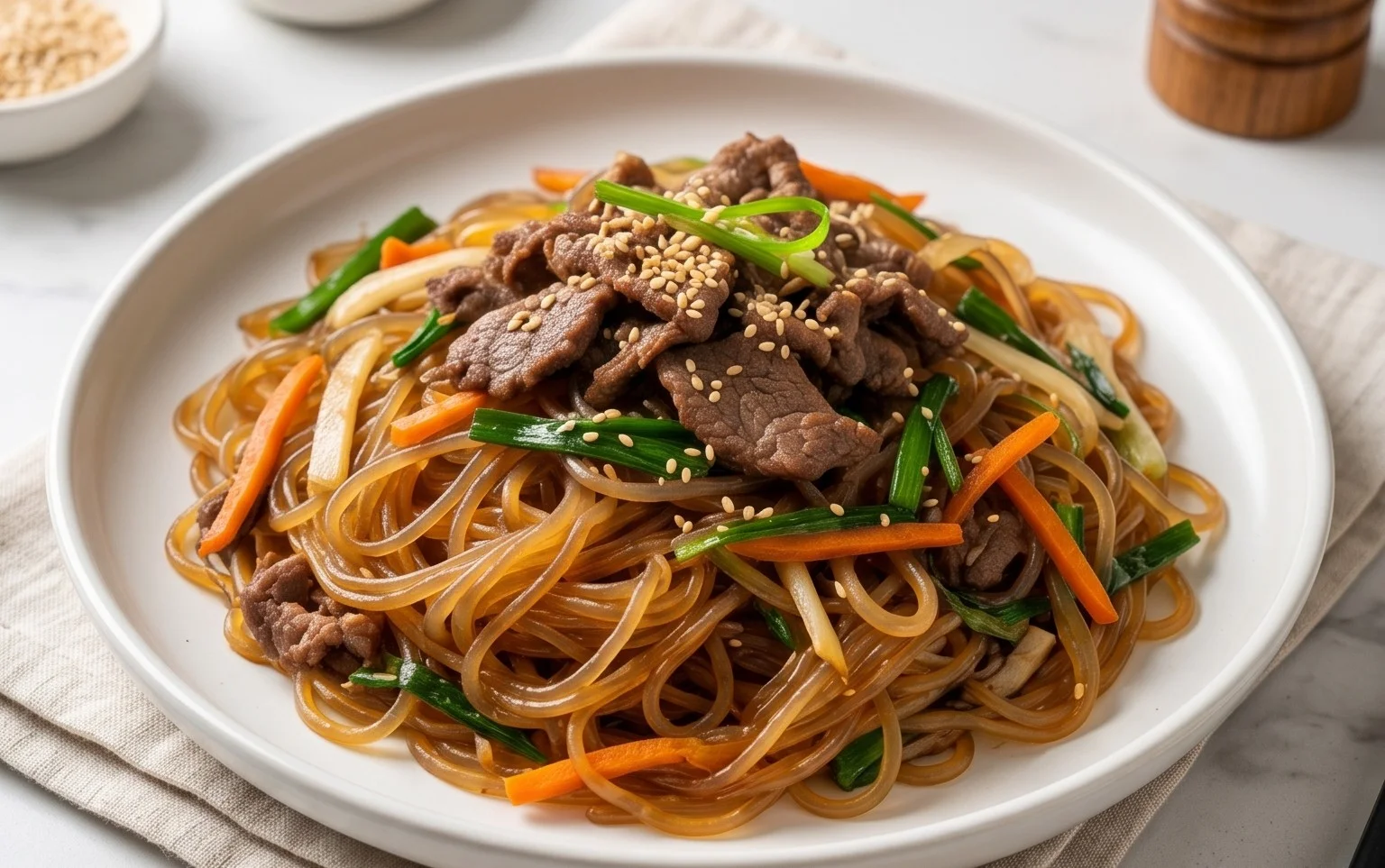
Japchae (Korean Glass Noodle Stir Fry)
Japchae is one of those quintessential Korean dishes that’s both comforting and vibrant. It’s a beautiful medley of textures and flavors, featuring chewy sweet potato noodles stir-fried with an assortment of colorful vegetables and savory protein. While it might seem like a lot of ingredients and steps, I promise, the process is quite manageable and incredibly rewarding. The final dish is perfect for a family meal, a special occasion, or even just a delicious way to use up some odds and ends in your fridge. The translucent, springy noodles are the star, absorbing the savory-sweet sauce beautifully. Let’s get cooking!
Ingredients:
Cooking Instructions:
Preparing Japchae involves a few distinct stages: cooking the noodles, preparing the individual components, and finally, bringin extractg it all together. This method ensures that each ingredient is cooked to perfection before being combined.
1. Prepare the Noodles and Marinade:
Start by rehydrating the sweet potato glass noodles. The best way to do this is to soak them in warm water for about 20-30 minutes, or until they are pliable but not mushy. Drain them thoroughly and then snip them with kitchen scissors a few times to make them easier to eat. While the noodles are soaking, let’s prepare the savory marinade for our beef. In a medium bowl, combine the beef strips with 2 tablespoons of the soy sauce, 1 tablespoon of the honey (or brown sugar), and a pinch of black pepper. Mix well and let it marinate for at least 15 minutes, or while you prepare the vegetables. This step is crucial for infusing the beef with flavor.
2. Cook the Individual Components:
This is where we cook each vegetable and the egg separately. This might seem like extra work, but it prevents everything from becoming soggy and allows the distinct flavors and textures to shine.
Heat a tablespoon of oil in a large skillet or wok over medium-high heat. Add the marinated beef and stir-fry until it’s just cooked through and browned. Remove the beef from the skillet and set it aside.
In the same skillet, add a little more oil if needed. Stir-fry the julienned carrots for about 1-2 minutes until they are slightly tender but still have a bite. Remove and set aside with the beef.
Next, add the thinly sliced yellow onion to the skillet and cook until softened and slightly translucent, about 3-4 minutes. Remove and set aside.
Add the sliced mushrooms and cook until they release their moisture and start to brown, about 3-5 minutes. Remove and set aside.
Now, let’s make the egg garnish. In a non-stick skillet, heat a tiny bit of oil over medium-low heat. Pour in the beaten eggs and cook them like thin omelets. Once cooked, let them cool slightly, then slice them into thin strips. These will be our beautiful, delicate garnish.
3. Blanch the Spinach and Prepare the Sauce:
For the baby spinach, a quick blanch is all it needs. Bring a small pot of water to a boil. Add the packed baby spinach and blanch for just 30 seconds, until it wilts. Immediately drain the spinach and rinse it under cold water to stop the cooking process. Squeeze out as much excess water as possible. This will prevent your japchae from becoming watery.
Now, let’s prepare the star of the show – the sauce! In a small bowl, whisk together the remaining soy sauce, the rest of the honey (or brown sugar), the brown sugar, and the toasted sesame oil. This is the sweet and savory elixir that will tie all the flavors of the japchae together. Taste it and adjust sweetness or saltiness as needed; everyone’s preference is a little different.
4. Combine and Stir-Fry:
Now for the grand finnon-alcoholic ale! In a very large bowl or a clean wok, combine the cooked glass noodles, the cooked beef, carrots, onions, mushrooms, and the blanched spinach. Pour the prepared sauce over everything. Gently toss and mix everything together with tongs or your hands, ensuring that the noodles and vegetables are evenly coated with the sauce. Be careful not to break the noodles. You can warm this mixture gently in the skillet over low heat for a minute or two to allow the flavors to meld, stirring constantly. This step helps to distribute the sauce evenly and ensures everything is warm.
5. Garnish and Serve:
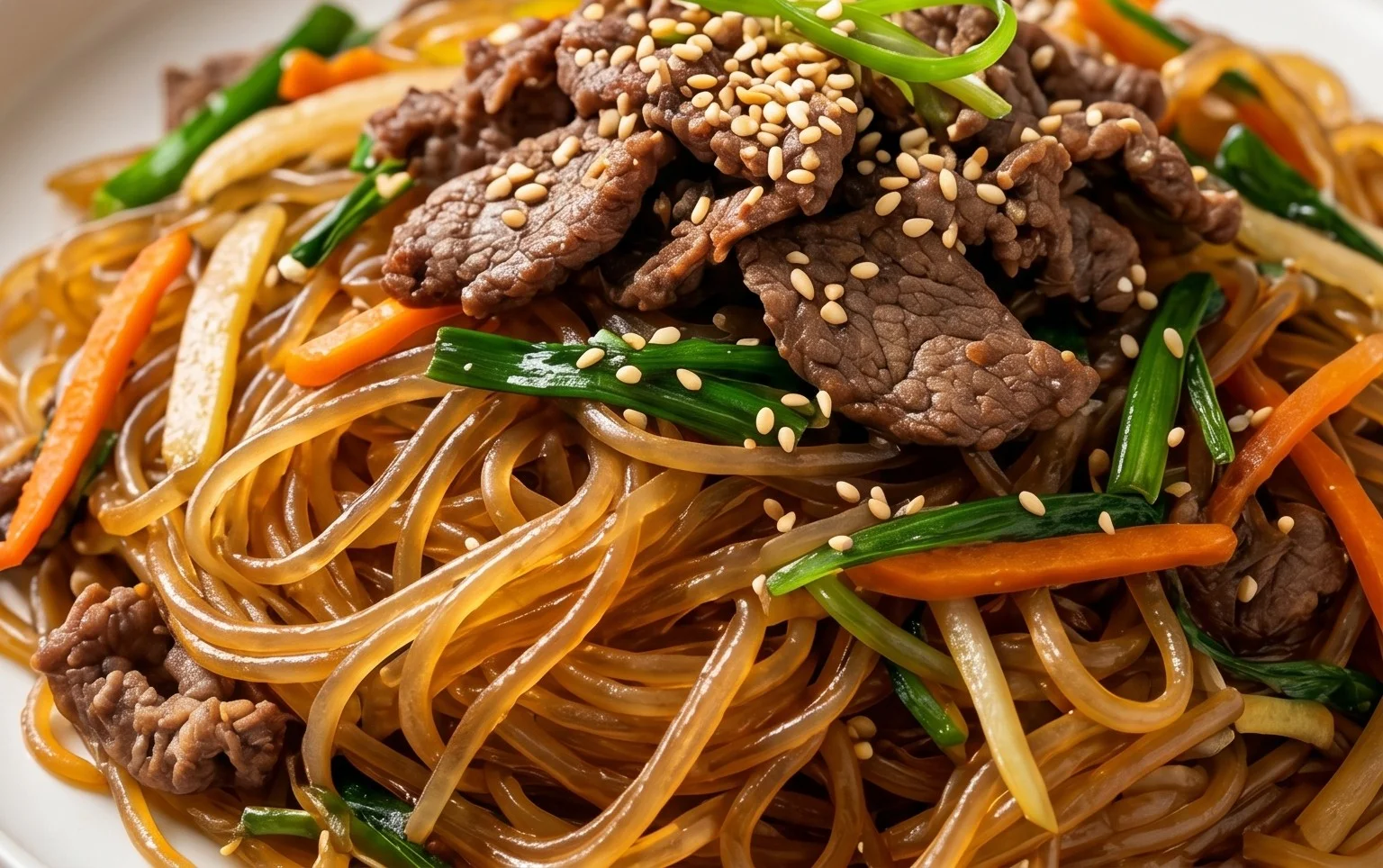
Once everything is beautifully coated and warmed through, it’s time to add the final touches. Stir in the green onions for a burst of fresh, oniony flavor and color. Transfer the japchae to a serving platter. Finally, sprinkle generously with toasted sesame seeds, if using, for an extra layer of nutty aroma and visual appeal. Serve hot and enjoy the delightful explosion of textures and flavors! Japchae is best enjoyed fresh, but leftovers can be stored in an airtight container in the refrigerator for up to 2-3 days. Reheat gently on the stovetop or in the microwave.
Conclusion:
You’ve now got the blueprint to create delicious and vibrant Japchae, a truly fantastic Korean glass noodle stir fry that’s both a feast for the eyes and the palate! This recipe is wonderful because it’s incredibly customizable, allowing you to tailor it to your taste preferences and what you have on hand. The combination of slippery sweet potato noodles, colorful vegetables, and savory seasoned protein is incredibly satisfying and offers a beautiful balance of textures and flavors. Whether you’re looking for a delightful side dish to accompany your Korean BBQ feast or a hearty vegetarian main, Japchae delivers every time.
I love serving Japchae at gatherings because it’s a crowd-pleaser and can be made ahead of time, making entertaining a breeze. It pairs wonderfully with other Korean staples like kimchi, bulgogi, or bibimbap. Don’t be afraid to get creative with your Japchae! Feel free to swap out vegetables like adding mushrooms, bell peppers of different colors, or even some spinach. For a vegetarian or vegan version, simply omit the beef and use a plant-based protein like tofu or extra mushrooms. The key is the savory-sweet soy sauce and sesame oil marinade for the noodles and vegetables.
I truly encourage you to give this Japchae recipe a try. It’s a rewarding dish to make and even more rewarding to eat. Get ready to impress yourself and your loved ones with this delightful taste of Korea!
Frequently Asked Questions:
Q: What are Korean glass noodles made of?
A: The “glass noodles” in Japchae are typically made from sweet potato starch. This gives them their unique translucent appearance when cooked and their delightfully chewy texture.
Q: Can I make Japchae ahead of time?
A: Yes, you absolutely can! Japchae is actually best when the flavors have a chance to meld, so making it a few hours or even a day in advance is perfectly fine. Just store it covered in the refrigerator and gently reheat it on the stovetop or in the microwave, adding a splash more soy sauce or sesame oil if needed to revive the flavors and prevent sticking.
Q: What can I use instead of beef in Japchae?
A: You have many options! Thinly sliced chicken or beef are great alternatives. For a vegetarian or vegan Japchae, consider adding more mushrooms (shiitake or king oyster work well), firm or extra-firm tofu that has been pressed and cubed, or even some thinly sliced zucchini or snap peas for added crunch and color.
Japchae (Korean Glass Noodle Stir Fry)
A popular Korean dish featuring stir-fried glass noodles, vegetables, and thinly sliced beef, seasoned with a savory and slightly sweet sauce.
Ingredients
-
12 ounces sweet potato glass noodles
-
16 ounces beef sirloin, cut into strips
-
2 large eggs, beaten
-
1 large carrot, peeled and julienned
-
1 medium yellow onion, thinly sliced
-
3 shiitake mushrooms, thinly sliced
-
2 cups baby spinach, packed
-
2 green onions, cut into 1-inch pieces
-
2 tablespoons vegetable oil, for cooking
-
1/4 teaspoon salt, or to taste
-
1/4 teaspoon black pepper, or to taste
-
7 tablespoons low-sodium soy sauce
-
3 tablespoons honey
-
2 tablespoons brown sugar
-
2 tablespoons toasted sesame oil
-
Toasted sesame seeds, for garnish (optional)
Instructions
-
Step 1
Cook glass noodles according to package directions. Rinse with cold water, drain well, and toss with 1 tablespoon of sesame oil and a pinch of salt and pepper. Set aside. -
Step 2
In a bowl, combine the beef strips with 2 tablespoons soy sauce, 1 tablespoon honey, 1 tablespoon brown sugar, and a pinch of pepper. Marinate for at least 15 minutes. -
Step 3
Heat 1 tablespoon of oil in a large skillet or wok over medium-high heat. Add the marinated beef and stir-fry until browned. Remove from skillet and set aside. -
Step 4
Add another tablespoon of oil to the skillet. Add the sliced onion and carrot, and stir-fry for 2-3 minutes until slightly softened. Add the mushrooms and cook for another 2 minutes. -
Step 5
Add the spinach and green onions to the skillet. Stir-fry until the spinach is wilted, about 1-2 minutes. -
Step 6
Add the cooked noodles, stir-fried beef, remaining soy sauce, honey, and brown sugar to the skillet. Toss everything together until well combined and heated through. -
Step 7
Stir in the toasted sesame oil. Taste and adjust seasoning with salt and pepper if needed. -
Step 8
Serve immediately, garnished with toasted sesame seeds if desired.
Important Information
Nutrition Facts (Per Serving)
It is important to consider this information as approximate and not to use it as definitive health advice.
Allergy Information
Please check ingredients for potential allergens and consult a health professional if in doubt.